
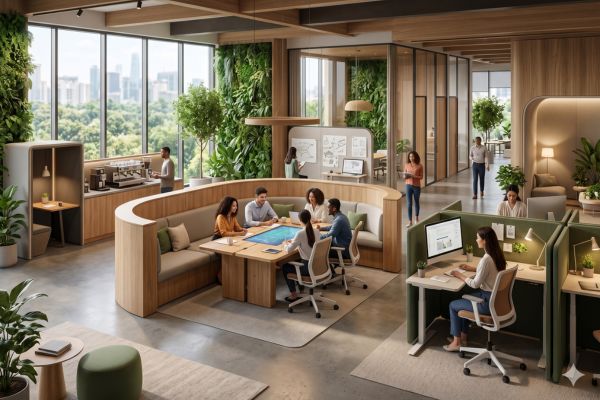
Beyond the Cubicle: Office Interior Design Trends to Boost Productivity in 2026
The traditional office is no longer a destination of necessity; it has become a destination of choice. As we move through 2026, the “standard” office layout—characterized by rows of identical desks and fluorescent lighting—is being replaced by environments that prioritize the human experience.
For modern businesses, interior design is no longer just about aesthetics. It is a strategic tool used to enhance cognitive function, foster collaboration, and support the diverse needs of a hybrid workforce. Here are the leading office interior design trends of 2026 that are redefining workplace productivity.
1. Neuro-Inclusive Zoning
One of the most significant shifts this year is the move toward neuro-inclusive design. Recognizing that every employee processes sensory information differently, offices are moving away from “one-size-fits-all” open plans.
Instead, we are seeing the rise of micro-zoning. These layouts offer a spectrum of sensory environments:
- Deep Focus Nodes: Library-style quiet zones with high-performance acoustic baffling and minimal visual clutter.
- High-Energy Hubs: Vibrant areas designed for brainstorming, featuring tactile materials and flexible furniture.
- Sensory Reset Rooms: Low-stimulus spaces with dimmable lighting and soft textures where employees can decompress to avoid burnout.
2. “Invisible” Tech Integration
In 2026, technology is felt rather than seen. The goal is to remove “digital friction”—the small annoyances like hunting for a dongle or finding a working outlet—that eat away at focus.
Modern offices now feature ambient technology embedded directly into the furniture. Think of conference tables with seamless wireless charging and “smart glass” partitions that turn opaque at the touch of a button for instant privacy. Furthermore, AI-driven environmental controls use occupancy sensors to automatically adjust lighting and temperature based on who is in the room, ensuring the climate is always optimized for alertness.
3. Biophilic 2.0: Deep Integration
We have moved past the era of the token potted plant in the corner. Biophilic design in 2026 is about “deep integration.” This includes vertical living walls that double as natural air purifiers and “circadian lighting” systems that mimic the progression of natural sunlight throughout the day.
Research shows that connecting with nature reduces cortisol levels and improves creative problem-solving. By using natural materials like reclaimed wood, stone, and cork, designers are creating “breathable” spaces that keep employees feeling energized rather than drained by the end of the day.
4. The Rise of “Workspitality”
The lines between the office, the home, and the hospitality industry are blurring. This trend, often called Workspitality, focuses on creating an environment that people want to be in.
Lobbies are being reimagined as concierge-style lounges, and breakrooms are evolving into high-end cafes. By incorporating residential-style furniture—think ergonomic lounge chairs instead of rigid plastic stools—offices provide the comfort of home with the professional infrastructure needed for high-level output. This comfort isn’t just a luxury; it’s a productivity booster that reduces physical fatigue and encourages longer periods of “flow.”
5. Sustainable Circularity
Sustainability is now a core pillar of productivity. A space that feels “disposable” rarely inspires high-quality work. In 2026, the trend is circular design, where furniture is modular, repairable, and made from recycled or bio-based materials.
Using low-VOC (Volatile Organic Compound) paints and finishes ensures that indoor air quality remains high, preventing the “afternoon slump” often caused by poor ventilation and off-gassing materials. Employees today want to work in spaces that align with their values, and a sustainable office fosters a sense of pride and belonging that naturally drives engagement.
Conclusion: Designing for the Human Rhythm
The overarching theme of 2026 is adaptability. A productive office is no longer a static environment; it is a living organism that shifts to meet the needs of the people within it. Whether it’s through movable walls that allow a team to “right-size” their collaboration space or quiet pods that offer a sanctuary for deep work, the best designs are those that don’t argue with human behavior.
By investing in these trends, businesses aren’t just updating their look—they are building a foundation for a more focused, creative, and resilient workforce.

This is Photoshop\’s version of lorem ipsum. Lorem Ipsum is simply dummy text of the printing and typesetting industry. Lorem Ipsum has been the industry\’s standard dummy text ever since the 1500
This is Photoshop\’s version of lorem ipsum. Lorem Ipsum is simply dummy text of the printing and typesetting industry. Lorem Ipsum has been the industry\’s standard dummy text ever since the 1500 Lorem Ipsum is simply dummy text of the printing and typesetting industry. Lorem Ipsum
Sed ut perspiciatis unde omnis iste natus error sit voluptatem accusantium doloremque laudantium, totam rem aperiam, eaque ipsa quae ab illo inventore veritatis et quasi architecto beatae vitae dicta sunt explicabo