
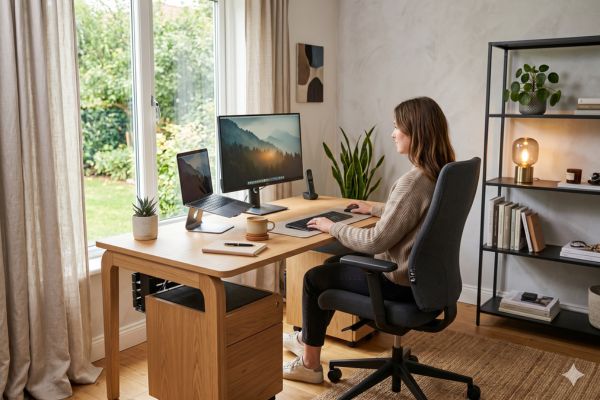
Creating a Workspace That Works: Choosing the Right Office Furniture
Whether you are designing a corporate headquarters or a dedicated corner in your home, the furniture you choose dictates more than just the look of the room. It directly impacts your physical health, your focus, and how effectively you can tackle your daily tasks. Selecting the right pieces requires a careful balance between ergonomics, utility, and aesthetics.
Here is a guide to choosing office furniture that prioritizes your well-being while maintaining a professional atmosphere.
1. Prioritize Ergonomics for Long-Term Health
The most critical investment in any office is an ergonomic chair. Since most professionals spend hours sitting, a chair that supports the natural curve of the spine is essential. When testing options, look for:
- Adjustable Height: Your feet should rest flat on the floor with your knees at a $90^{\circ}$ angle.
- Lumbar Support: The chair should provide firm support for the lower back to prevent slouching.
- Armrests and Swivel: These features reduce strain on the shoulders and neck, allowing you to move freely without overextending.
Similarly, consider a height-adjustable desk. The ability to transition between sitting and standing throughout the day can significantly improve circulation and energy levels.
2. Define Functionality and Workflow
Before purchasing, evaluate how you actually work. A minimalist laptop user has very different needs than someone managing physical files, multiple monitors, or specialized equipment.
- Surface Area: Ensure the desk is deep enough to hold your monitors at a comfortable viewing distance (roughly arm’s length) while leaving room for a keyboard and notepad.
- Storage Solutions: Clutter is a known productivity killer. Look for desks with built-in drawers or pair your workspace with mobile pedestals and shelving units. If your work is primarily digital, you can opt for sleeker, leggy designs that open up the room.
- Tech Integration: Modern furniture often includes built-in power outlets, USB ports, and cable management trays. These features keep wires hidden and prevent the “spaghetti” of cables from ruining your office aesthetic.
3. Reflect Your Personal or Brand Style
While comfort is king, style creates the atmosphere. Your office furniture should reflect the “vibe” of your work.
- Materials: Natural wood offers warmth and a classic feel, while glass and metal lean toward a modern, industrial look. Laminate is a durable, cost-effective choice for high-traffic environments.
- Color Palette: Neutral tones like grey, white, or wood grains are timeless and reduce visual distraction. However, don’t be afraid to add a “pop” of color through an accent chair or desk accessories to spark creativity.
4. Optimize the Layout
The placement of your furniture is just as important as the pieces themselves.
- Lighting: Position your desk near natural light sources if possible, but be mindful of screen glare.
- Traffic Flow: Ensure there is enough clearance to pull out your chair and walk around the desk comfortably. In smaller spaces, “floating” the desk in the center of the room can sometimes make the area feel larger than pushing it against a wall.
5. Quality Over Quantity
It is tempting to buy a full suite of inexpensive furniture, but office pieces undergo significant wear and tear. Investing in a high-quality desk and chair often saves money in the long run by avoiding frequent replacements and, more importantly, reducing the risk of work-related back or neck pain.
Conclusion
The right office furniture acts as a silent partner in your professional success. By focusing on supportive ergonomics, smart storage, and a cohesive design, you create an environment where you can perform at your peak. Take the time to measure your space, test your seating, and choose pieces that make you feel motivated to start your workday.

Hi, this is a comment.
To get started with moderating, editing, and deleting comments, please visit the Comments screen in the dashboard.
Commenter avatars come from Gravatar.